
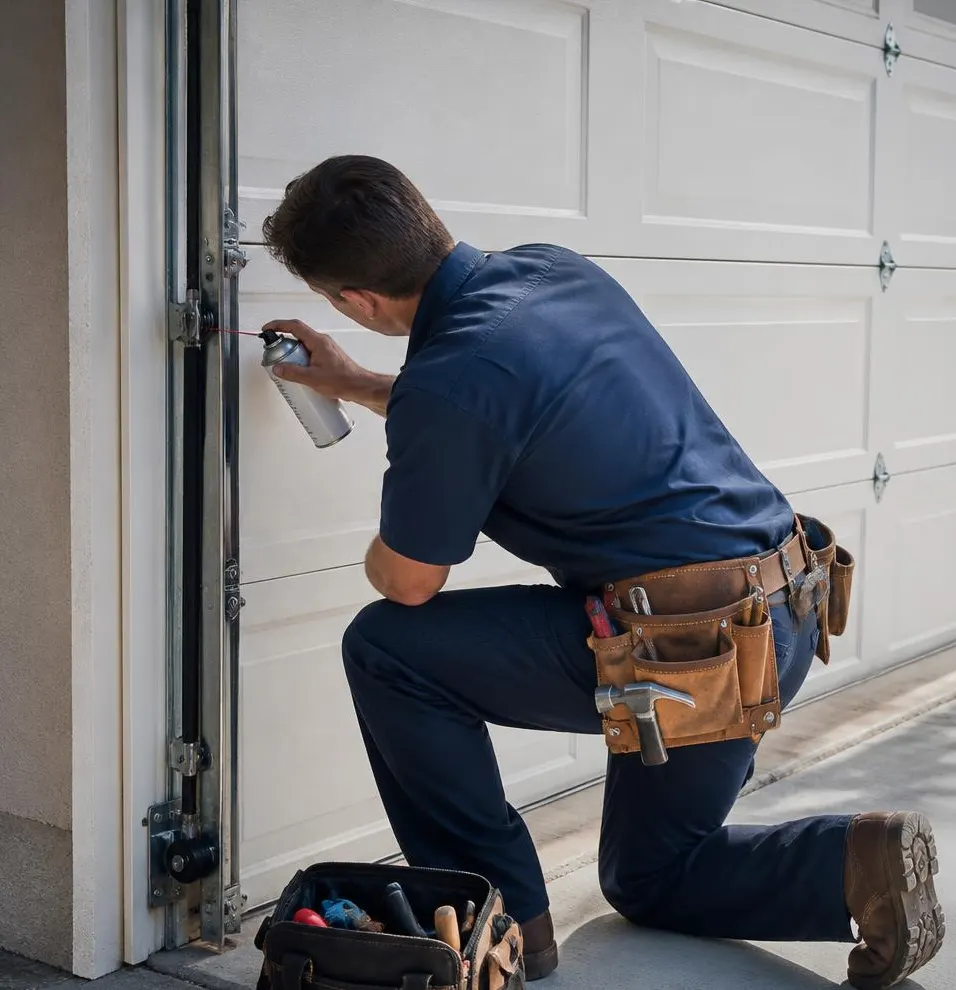
Rule of thumb: lubricate the moving metal parts of your garage door twice a year with a silicone-based or white lithium spray, and never put oil or grease on the tracks or on nylon rollers. The exceptions matter here on the Gulf coast — homes within a mile or two of the water deal with enough salt air that hinges and springs can start squeaking or showing surface rust well before the six-month mark, so a quick visual check every season is worth the five minutes it takes.
Why Lubrication Matters More in This Climate
Humidity doesn't just make the door feel sticky to open — it works its way into every metal joint. Combined with salt carried in on coastal breezes, that moisture speeds up corrosion on springs, hinges, and roller bearings faster than it would inland. Afternoon downpours and the swings between a soaked morning and a baking-hot afternoon also cause wood and composite panels to swell and contract, which puts extra stress on hinge points. Regular lubrication doesn't stop that cycle, but it slows the wear and keeps the door operating quietly and smoothly between tune-ups.
Tools You'll Need
- Silicone-based garage door lubricant or white lithium grease spray
- Clean, lint-free rags
- Soft-bristle brush or vacuum attachment
- Mild soap and water (for cleaning tracks and hardware first)
- Work gloves and safety glasses
- A sturdy stepladder
Step-by-Step: How to Lubricate Your Garage Door
- Disconnect the opener and close the door. Unplug the opener or switch off the circuit breaker so the door can't cycle while you're working underneath it.
- Inspect before you lubricate. Look over the springs, cables, hinges, and rollers for rust, fraying, or visible wear. If you see frayed cable strands or a spring with flat or cracked coils, stop here — that's a repair job, not a maintenance one.
- Clean the tracks. Wipe them down with a damp rag and mild soap to remove dirt, salt film, and cobwebs. Do not lubricate the tracks themselves — lubricant on the track attracts grit and makes rollers slip rather than roll.
- Lubricate the hinges. Spray a light coat directly onto each pivot point where the hinge bends, not across the whole hinge plate. Work the door up and down a few inches by hand to let the lubricant settle into the joint, then wipe off any drips.
- Lubricate the rollers — carefully. If you have steel ball-bearing rollers, apply lubricant to the bearing at the center, not the wheel surface. If your rollers are nylon, skip the lubricant entirely; oil and grease can break down the nylon over time and aren't needed since those bearings are usually sealed.
- Apply a light coat to the springs. A thin layer of lubricant on the torsion spring coils helps prevent rust, especially important near the coast. Spray lightly and let it drip-coat the coils rather than soaking them. Never attempt to adjust spring tension yourself.
- Lubricate the opener chain or screw drive, and the lock mechanism. A small amount of lithium grease on the opener's rail and a drop of lubricant in the lock cylinder keeps both moving freely.
- Run the door and listen. Reconnect the opener and cycle the door a few times. It should move smoothly and quietly. Any grinding, popping, or jerking after lubrication points to a mechanical issue the lubricant won't fix.
Products to Avoid
- WD-40: it's a water displacer and light cleaner, not a lasting lubricant — it evaporates quickly and attracts dust, which can gum up hinges faster than if you'd done nothing.
- Heavy grease on tracks: tracks only need cleaning, never grease.
- Oil-based lubricants on nylon rollers: they can soften and crack the nylon over time.
What's Safe for a Homeowner vs. What Needs a Technician
Cleaning, light hinge and roller lubrication, and wiping down tracks are all reasonable DIY tasks. What's not: adjusting or replacing torsion springs, straightening a bent track, replacing frayed cables, or recalibrating opener force settings. These involve stored tension or precise alignment that can cause serious injury or further damage the door if handled without the right tools and training.
When to Call Precision Garage Door of Cortez
If your inspection turns up rust pitting on the springs, cable fraying, or a roller that's jumped its track, it's time to call in a technician rather than keep lubricating around the problem. Our Garage Door Tune-Up & Maintenance service covers a full inspection, hardware tightening, and professional-grade lubrication of every moving part — plus we catch early signs of spring or cable fatigue before they turn into a door that won't open at all. If a spring has already failed, our Garage Door Spring Repair team can replace it safely the same day in most cases.
If your garage door is squeaking, sticking, or showing rust after another season of coastal humidity, call Precision Garage Door of Cortez and we'll get it running smoothly again.